

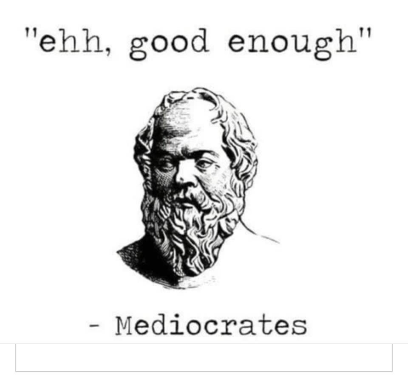
“Ideas are cheap. Execution is everything.”
If you are a startup, you have probably heard this from an investor, a podcast, or a book about startups. Execution is everything. Or, at least, it used to be.
We get ideas all the time. But when it came to execution, there was a hard stop. Where should I begin? I don’t know how to code or design. I have no clue how any of it works.
Execution was scarce, so execution was the moat.
That's the world that is flipping right now.
Execution was for the chosen ones
Think about what execution actually meant: very narrow, very deep knowledge. A small number of people could write software. A different small number could design an interface. Another group could write copy that worked; another could run a campaign. Every craft had its own masters, with years of practice behind them. That was how every craft had worked for millennia.
But did we always need that level of craftsmanship? The landing page didn't need a design award. The script didn't need a computer scientist. But “good enough” still required an expert, because the expert was the only person who could do it at all. Scarcity, not necessity, made execution expensive.
Good Enough
Now the machine helps build what you describe. Your ability to communicate what you want is reflected in the result. And often, we don’t need much. We build for ourselves, for a small team, for internal use. “Good enough” is good enough.
I have tried to visualise this idea. On the x-axis are people; on the y-axis, their ability to execute in a craft. The blue line is the world before AI: most people could do very little, while a small number could do a lot.
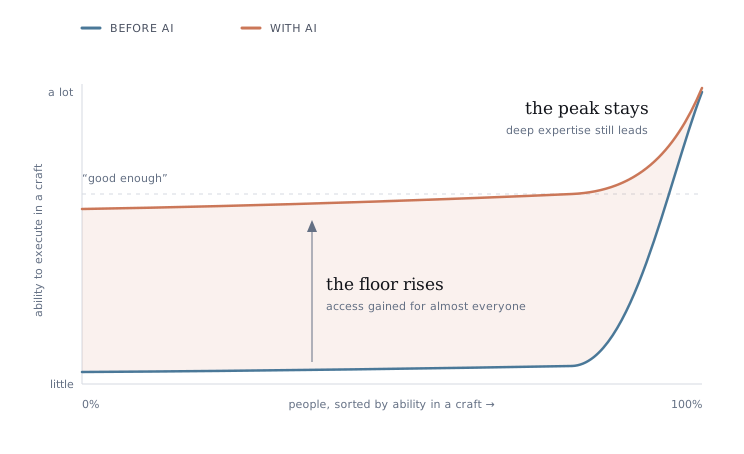
Conceptual sketch, not measured data.
AI doesn’t replace experts. It gives the rest of us a good-enough level, limited by our own willingness to dig deeper. The peak is still there. Deep experts still know more than everyone else, and for some problems only they will do. But the floor rose. Most people now stand at “good enough” in crafts they had no access to a couple of years ago. The total capability available to people exploded.
That's the flip. Not experts getting better. Everyone else getting access.
It’s happening
If the flip is happening, it shows up in numbers. And it does.
More apps. 557,000 new apps hit the App Store in 2025, up 24% and the biggest release year since 2016. Appfigures points straight at AI tools letting non-technical founders build. By April 2026, monthly iOS releases were up 89% year over year. Nearly double in a single year. Appfigures · TechCrunch
More code. 36 million new developers joined GitHub in 2025, more than one every second, and 121 million new repositories were created. It was the biggest year in the platform's history. GitHub Octoverse 2025
More products. Supabase saw database launches grow 600% in a year, with more than 60% of new databases launched by an AI tool. Its developer count went from 1.7 million to nearly 10 million in about fourteen months. Supabase · TechCrunch
These numbers do not prove that AI caused all of the growth. They show the scale of production rising around the tools.
The other half of the numbers
A 2026 NBER study by Demirer, Musolff and Yang, “Writing Code vs. Shipping Code”, followed more than 100,000 developers using AI tools. Coding activity rose 180%. Then the gain shrank at every step toward the finish line: 50% more projects, 30% more releases. Across four app marketplaces, there were more new apps but no increase in total usage. The FT's John Burn-Murdoch drew the graph: iOS app releases nearly doubled after agentic tools arrived. Apps with significant usage remained flat. App reviews were flat and falling.
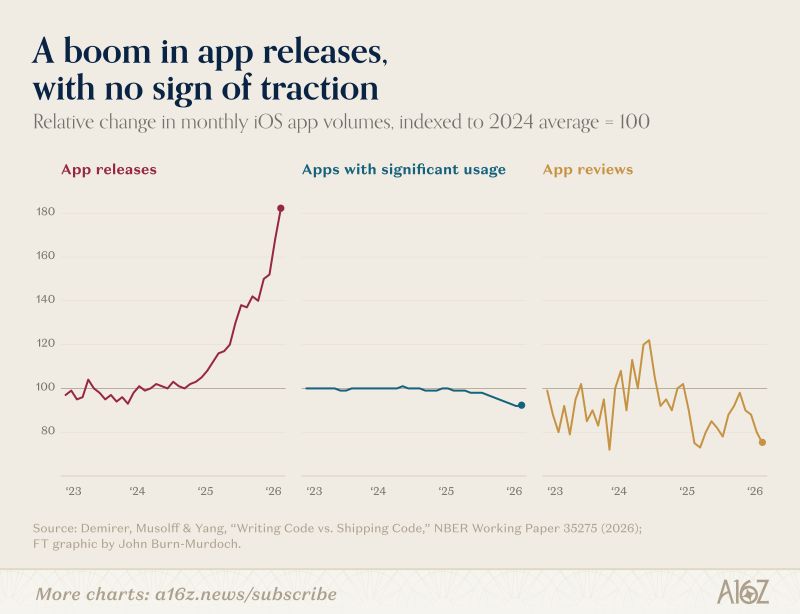
A boom in releases, no sign of traction. There are two ways to view this. One: what is the point if no one is using this wall of slop? The other: the boom proves access is real. The people who couldn't ship now ship. The flat line proves access is not the game. When everyone can execute, shipping stops meaning anything by itself.
The plateau produces volume. Something else produces traction.
We have been here before
This is not the first time a craft fell out of its throne.
In 1888 (yes, not 1988), Kodak's slogan was “You press the button, we do the rest.” Photography stopped being chemistry and became something anyone could do. Being a photographer stopped meaning operates the equipment and started meaning sees something worth keeping. Desktop publishing in the eighties gave everyone typesetting. Most of what got printed looked like a ransom note, but design didn't die. It moved upstream. Streaming gave every musician distribution: about 99,000 new tracks now land on the services every day. Of the 202 million tracks sitting there, 175 million were played a thousand times or fewer last year. MBW / Luminate
The pattern has held for a century and a half. The tool democratizes. Volume explodes. Every time, there is panic that “quality is dead.” Attention stays exactly as scarce as it always was, so the game doesn't disappear. It moves upstream to whoever has the eye, the taste, the thing to say. The craftsman remains. Only those who had nothing but skill and access to tools disappear.
One thing is new this time. Earlier waves freed one craft at a time: photography, then type, then distribution. This wave frees the making itself. The same pattern is happening everywhere at once.
The bottleneck moved
If execution is cheap, it stops being the moat. What's scarce now sits upstream: knowing what to build, and why. The specific, thought-through, lived-with idea was never actually cheap. It just looked cheap next to execution.
The entry toll collapsed. The time you would have spent earning the right to build can now go into the thing you're building: the problem, the people who have it, the tenth question after the obvious nine.
When everyone can execute, output stops proving anything. Slop is what shallow understanding looks like at scale.
Execution is cheap now. Digging is not. How deep are you willing to go?